Who is actually searching for a construction company?
Buyers with a specific package to place. A housebuilder’s buyer looking for a brickwork subcontractor in West Yorkshire. A main contractor’s quantity surveyor searching for groundworks contractors near a site in Sheffield. A housing association officer checking that the firm on a tender list is real. An architect in York looking for a steel fabricator who has done a school before. Almost none of them type the word construction on its own.
Smaller firms doing extensions and refurbishments also get homeowners, and that is a different search with a different page. The mistake is one site trying to serve both with the same words.
Which searches should a construction firm target?
Trade plus region first, then trade plus capability, then sector. Brickwork contractor Yorkshire, groundworks contractor Leeds, roofing contractor for housebuilders, steel fabrication Bradford. These are low-volume searches, sometimes a few dozen a month, and each one has a contract behind it worth many times what a year of search work costs. That arithmetic is why construction is such a good fit for SEO.
Sector pages are the layer most firms miss. If you work for housebuilders, say so on a page; if you do education, healthcare or commercial fit-out, each of those deserves one, because buyers search by the kind of project as often as by the trade.
What does a construction website need to rank?
A page for each trade or service, a page for each sector, a project page for each significant job, and the paperwork buyers will ask for anyway: accreditations, health and safety, insurance, the team. Bond Brickwork’s site is built exactly that way, and it has taken the company to the top of Google for the commercial brickwork searches that matter.
The pages need substance a buyer would recognise. Scale, in units and square metres. The developments and clients you can name. Photographs of the actual work, which for a contractor usually means the drone. A description of how you resource a job. All of it written plainly, because the person reading it is comparing five firms before lunch.
- Trade and service pages, one each
- Sector pages: housebuilders, commercial, education, healthcare
- Project pages with the development, the town and the scale
- Accreditations: CHAS, Constructionline, SSIP and the rest
- Health and safety, insurance and capacity
- People: directors, contracts managers, site teams
Do project pages help SEO?
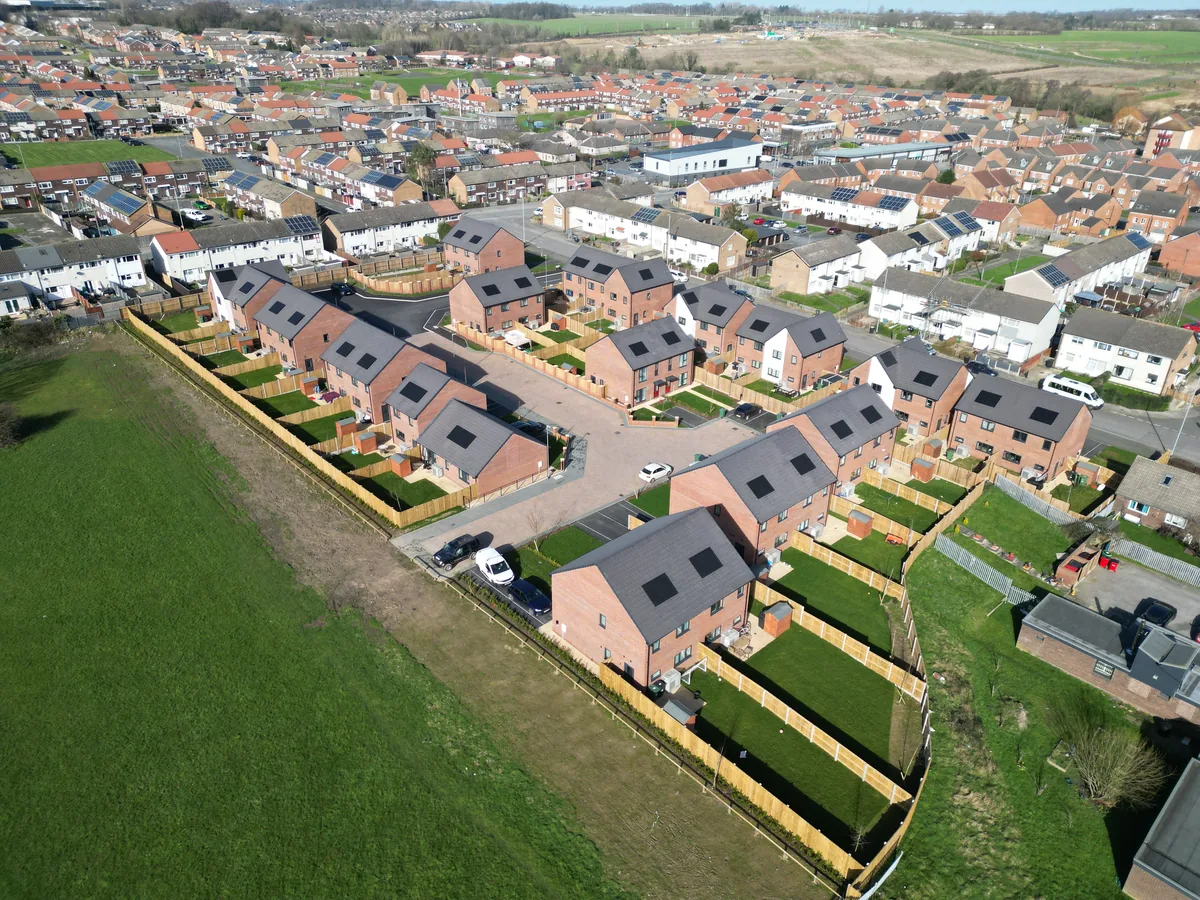
More than anything else on a construction site. A project page names a development, a town and a client, which is exactly what a regional buyer’s search contains, and it carries the photographs that prove the claim. Bond’s site names the developments it has laid brick on, Swarcliffe in east Leeds among them, photographed from the air as the work went up, and those pages are what rank for the town-level searches.
Write one for every job you would be proud to show a buyer, with the plain facts: what, where, for whom, how big, when. Two hundred words and six photographs is enough. Standeven Flooring’s site does the same for commercial flooring, and showing jobs like the M&S Food store in Pudsey has helped it win more large contracts.
Does a construction company need Google Maps?
Less than a trade does, and it still needs the profile to be right. Buyers placing a subcontract package rarely start with the map, but they check the profile once they have a shortlist, and the reviews and photographs on it are part of the decision. Verify it, choose the right primary category, add the projects as photographs, and ask satisfied clients and site managers for reviews.
For a firm that also does domestic work, the map matters a great deal more, and the local SEO guide on this site covers it.
What results are realistic for a construction firm?
Top of Google for the specific trade and region searches, within months, and being named by AI search once the evidence is there. That is Bond’s position, built on search work since 2018 and kept there by adding every new development as it is completed. Nobody can promise a position and we will not, but construction searches are less contested than most and a firm with real projects to show has an advantage that no agency can fake for a competitor.
The measure to hold it to is enquiries from the right kind of buyer, and the value of the contracts they turn into.